04 November, 2026
Beyond Reading and Writing: How World Literacy Helps Our Students Understand the World
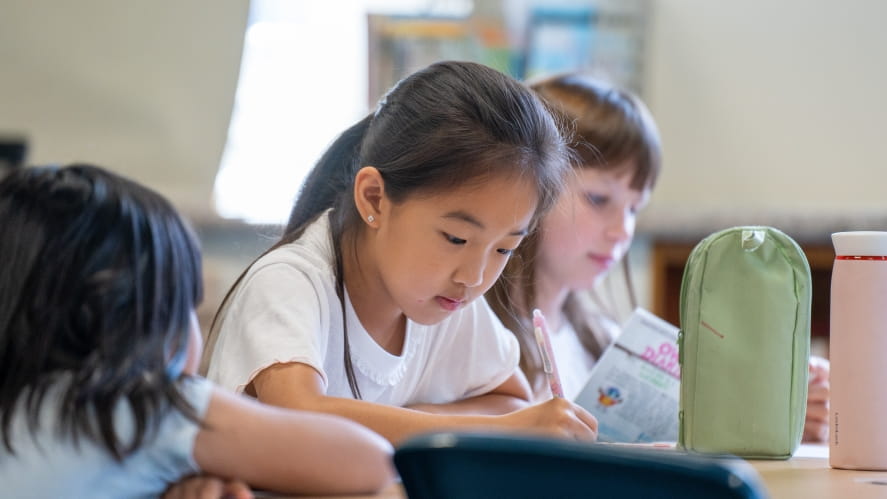

What does it mean to be literate in a world where information is everywhere, perspectives differ, and the ability to communicate has never been more important?
For today's learners, literacy is about much more than reading a book or writing a paragraph. It is about asking questions, making connections, evaluating information, understanding different perspectives, and communicating ideas with clarity and purpose.
At Dalian American International School (DAIS), World Literacy provides an opportunity to bring these skills together across the elementary curriculum. Through meaningful reading, purposeful writing, thoughtful discussion, and inquiry into the world around them, students develop the tools they need not only to learn about the world, but to understand it.
What is World Literacy?
At DAIS, World Literacy brings Language Arts and Social Studies together through an interconnected, interdisciplinary approach to learning across Kindergarten to Grade 5. Rather than treating reading, writing, and the study of the world (Social Studies) as separate areas of learning, students develop these skills together, using literacy to explore meaningful concepts and make sense of the world around them.
Our curriculum is vertically and horizontally aligned, meaning that learning connects across grade levels and across subject areas. Each year builds on the knowledge and skills developed previously, while students explore new content and increasingly complex ideas. Shared systems and structures provide consistency across the elementary years, allowing students to focus on their learning, deepen their understanding, and apply familiar skills in new contexts.
Students are not only learning how to read and write; they are using these skills to investigate history, explore geography, understand economics, consider citizenship, and examine how societies and the world change over time.
World Literacy in Practice: From Kindergarten to Grade 5
What does this look like in our classrooms?
This quarter, elementary students are exploring the overarching understanding Our Changing World: Past, Present, and Future. Although students across the grades are investigating a shared concept, their learning is tailored to their developmental stage, building from personal experiences towards more complex historical thinking.
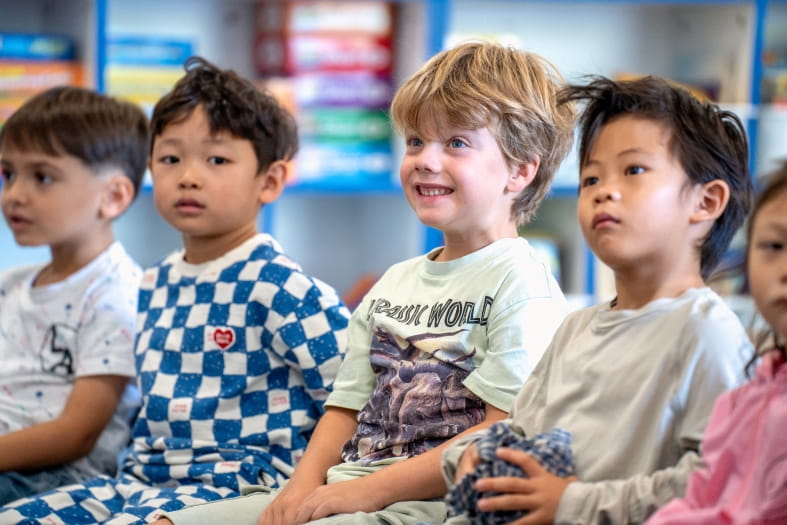
In Kindergarten, students are developing foundational literacy skills, including phonemic awareness and correct letter formation, while exploring yesterday, today, and tomorrow. As they reflect on their own lives and how they have grown, they begin to understand how time passes and how things change. These early experiences lay the foundations for exploring change over time, while students continue to develop the skills they need to become confident readers and writers.
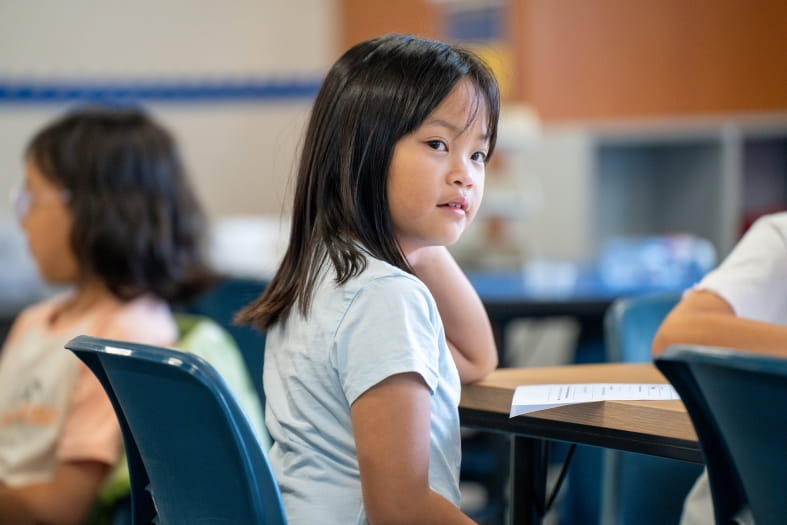
In Grade 3, students are developing their understanding of different sentence types while investigating Ancient Egypt and exploring how societies have developed over time. Through their study of this ancient civilization, they examine how people lived, how societies were organized, and how the past can help us understand the world today. As they communicate their learning, they apply their growing understanding of language to express ideas clearly and effectively.
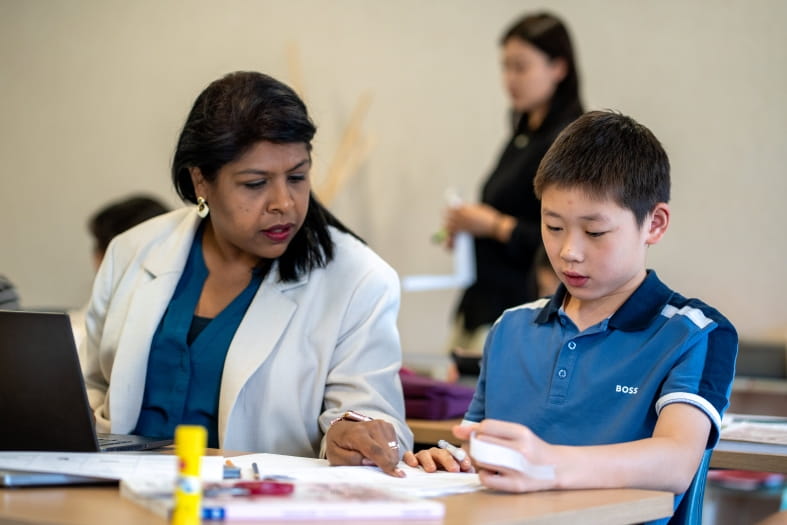
In Grade 5, students are exploring morphology, the study of how words are formed, by investigating Latin and Greek roots to deepen their vocabulary and understanding of language. Alongside this, they are exploring Ancient Greece through the question, Why does the past still matter today? They examine the influence of ancient Greek civilization on the modern world, making connections between historical developments and ideas that continue to shape society. By exploring word origins alongside the legacy of an ancient civilization, students discover how language can reveal connections between the past and the present.
Across these learning experiences, students do more than acquire facts. They develop their literacy skills in meaningful contexts, learning to interpret information, ask questions, analyze evidence, make connections, and communicate their understanding. They are encouraged to think critically about what they learn, reflect on how their thinking develops, and use technology purposefully to support their research and inquiry.
Through this progression, students move from understanding change in their own lives to examining the development of societies and evaluating the lasting influence of the past. Their knowledge deepens, their literacy skills develop, and their thinking becomes increasingly sophisticated. The content becomes more complex, but the purpose remains consistent: to equip students with the skills to make meaning, communicate effectively, and better understand the world around them.
Preparing Students to Understand the World
In an increasingly interconnected world, the ability to find information is only the beginning. Students also need to evaluate what they read, recognize different perspectives, make connections between ideas, and communicate their thinking effectively.
World Literacy provides opportunities for students to practice these skills in meaningful contexts. By exploring real-world concepts through reading, writing, discussion, and inquiry, students learn to look beyond individual facts and consider the bigger picture. They develop the confidence to ask questions, the curiosity to investigate further, and the ability to explain not only what they think, but why they think it.
These skills extend beyond the classroom. Whether students are interpreting information online, discussing a global issue, learning about another culture, or sharing their own ideas, they draw on the same foundations: understanding information, thinking critically, and communicating with purpose.
A Shared Journey Between School and Home
Families play an important role in nurturing these skills. Everyday conversations provide opportunities for children to ask questions, explain their thinking, and explore different perspectives. Discussing a book, comparing information, looking at a map, or talking about how the world has changed can all encourage children to make connections between their learning and their lives.
Parents do not need to be experts in every subject or speak fluent English to support this development. Encouraging curiosity, sharing stories in any language, and inviting children to explain what they have learned can make a meaningful difference.

At DAIS, World Literacy is about equipping students with the knowledge and skills to understand the world around them and engage thoughtfully with it. By connecting learning across subjects and building understanding year after year, we aim to develop learners who are not simply able to read and write, but who can question, connect, communicate, and continue learning throughout their lives.
Written by: Lauren Smith
DAIS-E Literacy Coordinator
Related news
News image ![Elementary students in the classroom]() News | Elementary
 News | Elementary
DAIS Elementary Celebrates Excellent NWEA MAP Results
Science averages were above the regional China comparison in every assessed grade, while Grade 4 performed above that comparison across all four subjects.
News image ![swimming]() Blog | Elementary
 Blog | Elementary
Building Confident and Safe Swimmers at DAIS
Our teacher is Introducing the elementary swimming program.