17 November, 2026
Why We Set Aside Twenty Minutes a Day for a Flag
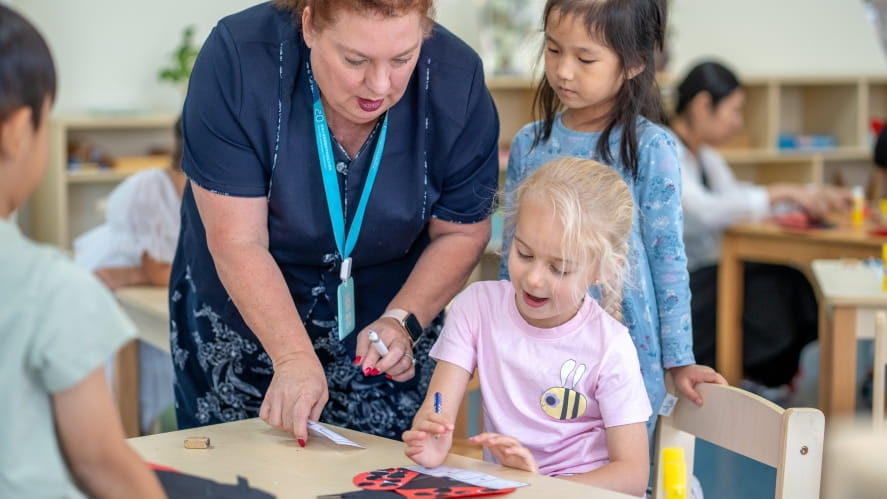

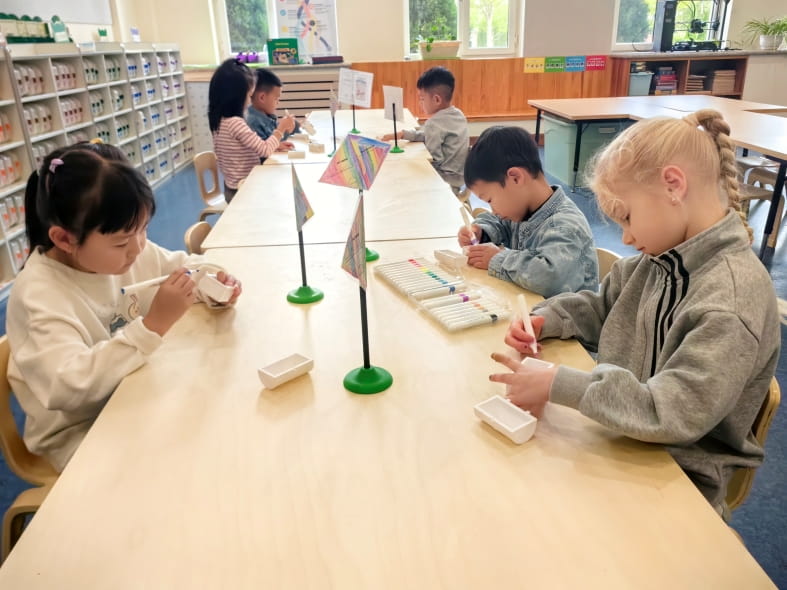
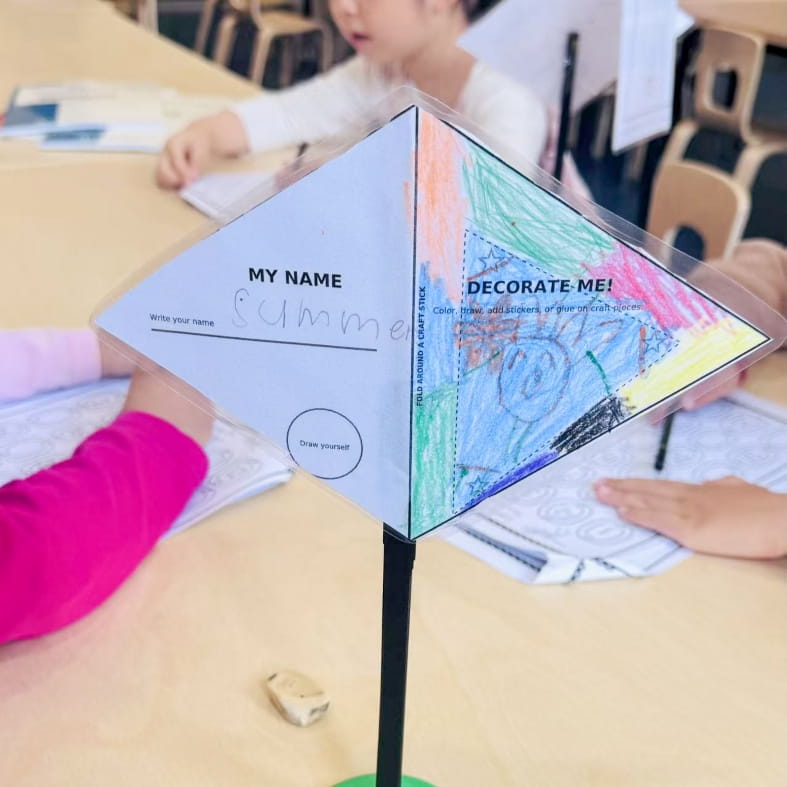
If you have peeked into an Early Years classroom lately, you may have noticed something a little unusual: small flags, each with a child's name and a drawing they made themselves, tucked into different corners of the room. They are the heart of a daily routine we call Flagtime — and they are quietly doing something remarkable.
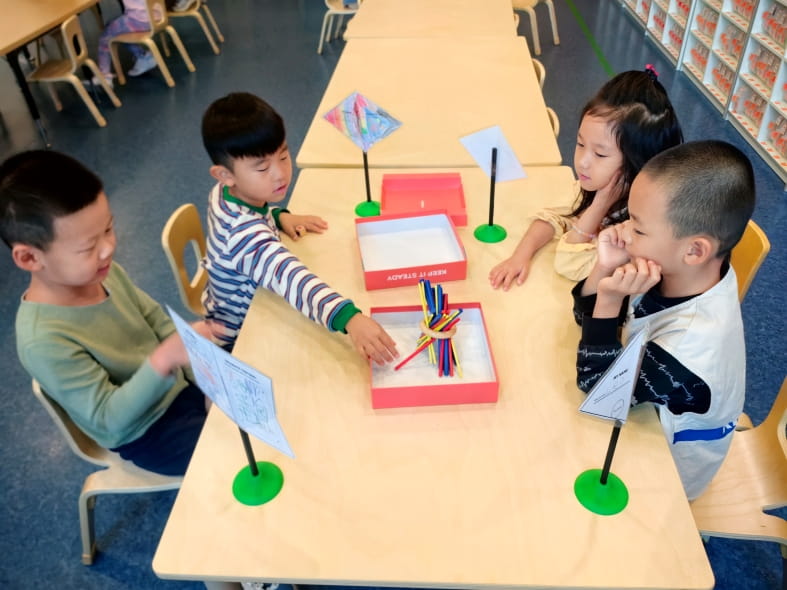
As Head of Early Years, I am often asked what we mean when we talk about “learning how to learn.” Flagtime is our answer. Every day, for around twenty minutes, each child in our Reception classes follows their own flag to a task chosen especially for them. They work on it, and then they talk it through one-to-one with their teacher: what felt easy, what felt tricky, and what they might try next time. In the process, they are building something researchers call metacognition — an understanding of how they think and learn best.
What Is Flagtime?
Flagtime is a daily 20-minute routine. This year it is running in our Reception classes, and we are excited to extend it to our Toddler group next year. Each child has a personalized flag — their name and a drawing they have made themselves, so it is unmistakably their own — placed at a learning station with an activity tailored to their needs, strengths or interests. Some children work alone; others join a small group of peers who share an interest or are working on the same skill. At the end, each child reflects individually with their teacher and sets a small personal goal for next time.
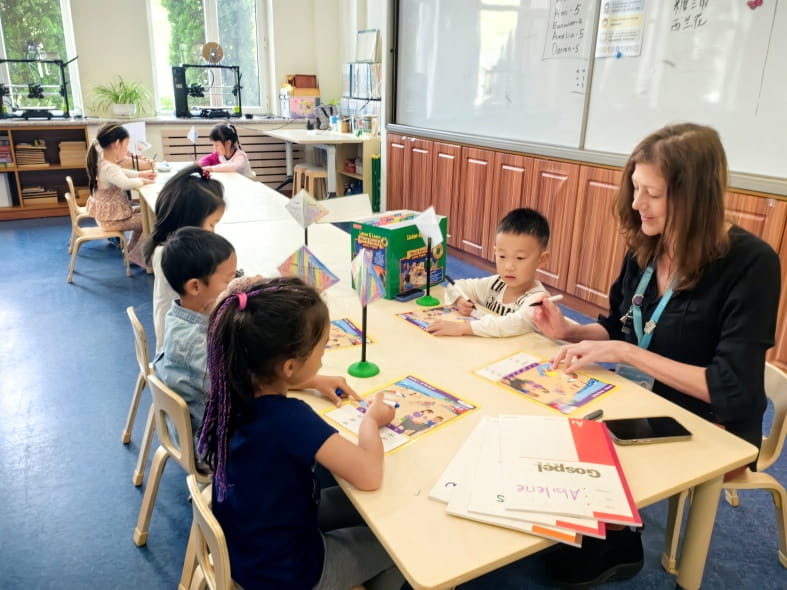
Because the task is pitched at just the right level, every child — the confident and the cautious, the fluent English speakers and those still finding their words — gets a genuine chance to succeed and to stretch.
Where Flagtime Came From
Flagtime was developed by Dr. Anne Baldisseri, Head of School at Avenues São Paulo. It began, quite simply, as a way to personalize learning for young children: to give each child daily practice in exactly what they needed, at exactly the right level. When schools moved to distance learning during the pandemic, those same principles were adapted into a structure called Targeted Practice — and the idea kept growing.
Today Flagtime is the focus of a global research project led by Nord Anglia Education, the third in a series of metacognition studies that also includes work with Boston College and Harvard’s Project Zero. More than 50 classrooms worldwide took part in the first phase, and the findings, published in late 2025, are striking.
The Science Behind Flagtime
Metacognition is the ability to be aware of, reflect on, and direct your own thinking. It sounds abstract, but it is one of the most powerful and best-evidenced levers in education. The Education Endowment Foundation, which reviews thousands of classroom studies, rates metacognition and self-regulation as “very high impact for very low cost” — worth around seven months of additional progress over a year, with the strongest effects in the primary years.
For a long time, people assumed this kind of thinking was the preserve of older students. Flagtime shows otherwise. In the Nord Anglia study, run from November 2024 to June 2025, teachers assessed children before and after using the CHILD framework (Checklist of Independent Learning Development), developed by researchers at the University of Cambridge, which measures self-regulation, metacognition and social-emotional skills on a four-point scale.
Every area measured improved. The biggest gains were:
| Skill area assessed | Average improvement |
|---|---|
| Negotiating when and how to carry out tasks | +0.76 |
| Engaging in independent, cooperative activities with peers | +0.72 |
| Adopting previously heard language for their own purposes | +0.72 |
| Becoming aware of their own strengths and weaknesses | +0.69 |
Any increase above +0.50 was considered meaningful growth, so these results represent genuine, measurable development in executive function, language and self-awareness — exactly the foundations of early learning.
What This Looks Like in the Classroom
Teachers describe Flagtime as a shift in mindset. Children stop waiting to be told what to do and start asking themselves what they need. In particular, it builds:
- Independence — choosing and starting a task, and sticking with it.
- Resilience — trying a different strategy when something is hard, rather than giving up.
- Collaboration — taking turns, sharing, and solving problems with a partner.
- Language — borrowing the words teachers model and using them to explain their thinking, in English or in a home language.
- Self-awareness — knowing what you are good at and where you could use a hand.
What We Hope Your Child Takes From It
Flagtime is not about a single activity or a test. It is about habits that last. Our aim is that every child leaves Early Years able to:
- talk about their own learning with confidence;
- set a small goal and recognize when they have met it;
- know what helps them learn — and ask for it;
- see mistakes as information, not failure;
- approach something new with curiosity rather than worry.
The Everyday Benefits
These skills do not stay in the classroom. Metacognition is what helps a child get dressed in the morning without twenty reminders, work out why their tower keeps falling down, or calm themselves after a disagreement. Children who learn to plan, monitor and adjust become more confident problem-solvers — and, over time, more independent learners.
How You Can Support It at Home
You are already your child’s first teacher, and there are simple ways to build on what we do at school:
- Ask “what was easy and what was tricky today?”, rather than only “what did you do?”
- Wonder out loud: “Hmm, this isn’t working — what else could we try?”
- Name the strategies you see: “You tried again after it fell. That’s persistence.”
- Let them struggle a little. A moment of productive struggle is where learning happens.
- Celebrate the effort and the thinking, not just the result.
Flagtime is one of the things I am proudest of in our Early Years. It is gentle, it is playful, and it is grounded in some of the best research available — but most importantly, it is already changing how our children see themselves as learners. As we look ahead to welcoming our Toddler group next year, I am excited to see how far these habits will travel. If you would like to see Flagtime in action, or to talk about how it works, please do get in touch.
Ms. Sharon Churchwell
Head of Early Years
Related news
News image ![Students wordking at the r computers]() Blog | Featured
 Blog | Featured
Yes AI or No AI? Future-Ready Learning at DAIS
At Dalian American International School, we believe that preparing students for this world means much more than teaching them how to use technology.
News image ![swimming]() Blog | Elementary
 Blog | Elementary
Building Confident and Safe Swimmers at DAIS
Our teacher is Introducing the elementary swimming program.