03 December, 2025
MIT Student Trip 2025: DAIS Students Explore STEAM Innovation

A Week of Creativity, Curiosity, and Collaboration
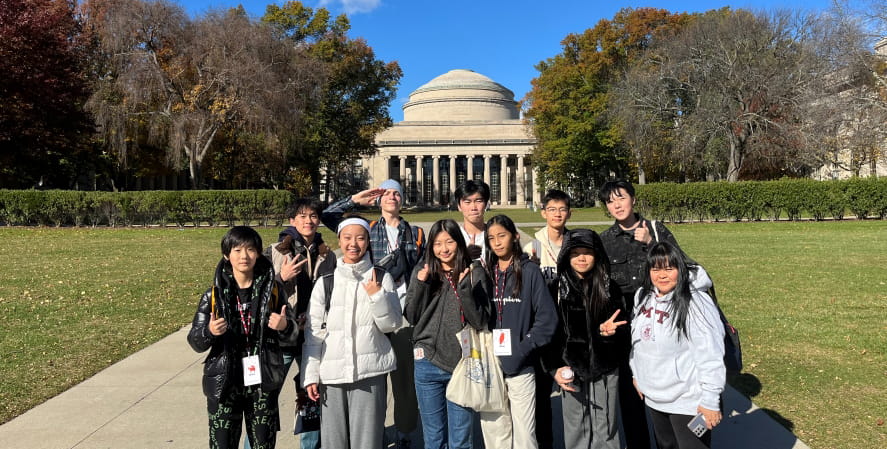
From November 2 to 7, 67 students from 55 Nord Anglia schools around the world gathered in Cambridge, Massachusetts to collaborate with leading STEAM innovators through workshops, challenges, and hands-on activities. Among them were two DAIS/Huamei students, Kenneth Zhang and Johnny Li, accompanied by their teacher, Ms. Ana Diarez.
To earn their place at MIT, both students completed a STEAM-related project that required them to identify a problem they care deeply about and design an innovative solution. Kenneth designed an AI-monitored, solar-powered robot capable of patrolling coastlines to collect marine debris. Meanwhile, Johnny used a species distribution model combined with artificial intelligence to forecast suitable habitats for endangered species such as Goniurosaurus luii, helping protect them from extinction.
Hands-On STEAM Experiences at MIT
After arriving at MIT’s Cambridge campus, our students dove into a series of hands-on workshops led by MIT experts and current students. From “Origami Engineering” to “Catching Physics in the Act,” these sessions brought STEAM (Science, Technology, Engineering, Arts, and Mathematics) into real-world contexts.
Students had the chance to step inside some of MIT’s most innovative research spaces, including the Plasma Science and Fusion Center and the Huang-Hobbs BioMaker Space. These visits offered a rare glimpse into groundbreaking work, inspiring new academic interests and future ambitions.
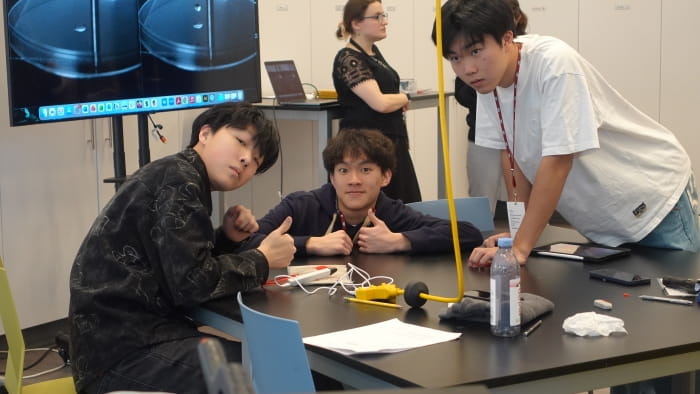
Kenneth shared, “I’ve always been interested in physics, but I wasn’t sure where that path would take me — maybe engineering, maybe pure physics. Then I visited MIT’s Plasma Science and Fusion Center, and it was absolutely phenomenal. Tucker, one of the researchers, showed us a reactor the size of an entire room and explained how they’re working to create sustainable energy using magnetism and electricity. It’s clean, unlike coal, and could power the world for generations without harming our health. Seeing that level of innovation was incredible, and it inspired me to consider studying plasma science and fusion energy in college.”
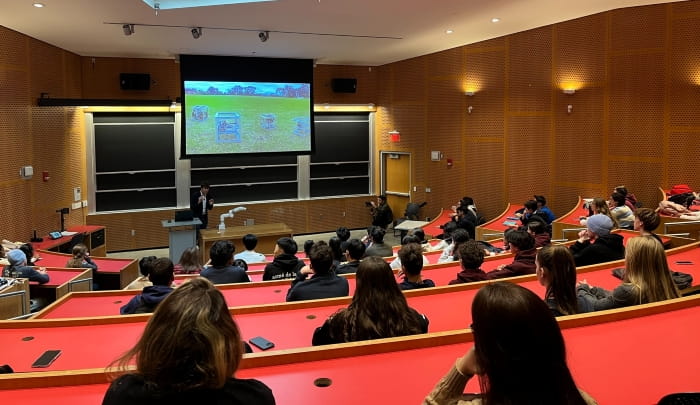
Johnny continued, “One of the most memorable moments for me was a workshop where a YouTuber shared fascinating insights about environmental science. I even got to touch real fossils, which was something completely new for me! That experience sparked my interest in studying marine biology or environmental science.
I’ve always loved animals (I have a gecko and a snake at home), and biology helps me understand how species adapt and evolve to survive. Seeing how MIT creates spaces for hands-on exploration made me realize how much innovation is possible in this field.”
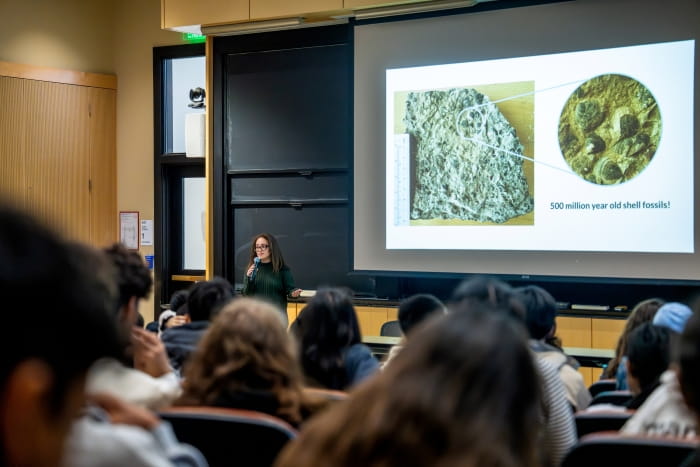
Fossil demonstration
For Ms. Diarez, the trip offered fresh perspective and inspiration. She said, “I have decided to pursue my PhD and aim to complete it in three years. Being a student again rekindles a youthful spirit, and working alongside students allows me to share my past experiences while embracing new ideas from the younger generation.”
Connecting with Peers from Around the World
Just as memorable were the connections our students and educators made with peers from Nord Anglia schools around the world. They exchanged stories about academics, everyday life, and the unique experiences of growing up in different countries.
Kenneth recalled, “My favorite moment was meeting new friends from international schools and sharing dinner at the Cheesecake Factory. We laughed, talked about academics and family, and exchanged stories about life in different places. That was probably my favorite moment of the trip.”
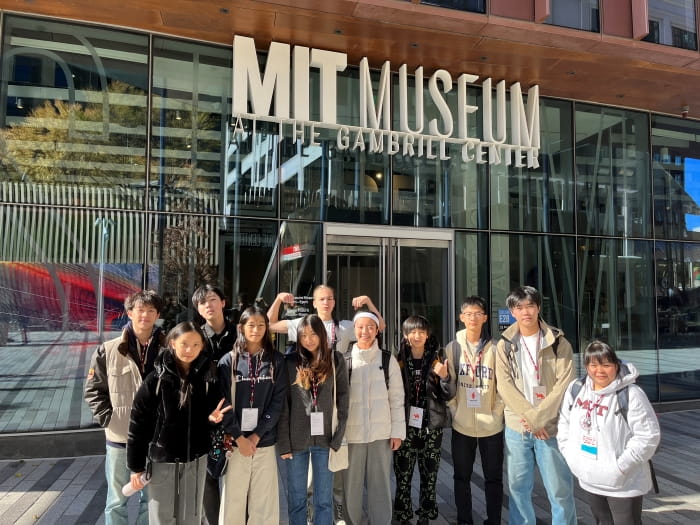
Johnny had a similar experience. He said, “I met students from Guangzhou, Japan, and even an Indian student living in Costa Rica. We shared stories about food and local traditions. It was so interesting to explore our differences!”
Tackling Global Challenges
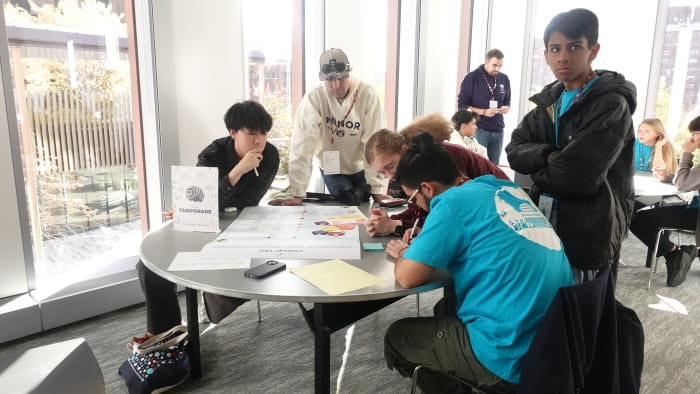
On Tuesday, November 4, students faced one of the most exciting challenges of the week: designing an experiment for a zero-gravity environment. Their task was to design a project that could work in zero gravity, tested on a special flight where the plane dives to create short moments of weightlessness.
Kenneth’s team, for example, developed a “dust vibrator,” a platform and box system designed to collect lunar dust and use vibration and an electric field to make the particles clump together. The goal was to help astronauts keep their visors clear during moon missions. There were hurdles with circuits, batteries, and getting the electric field to work, but through teamwork and creative problem-solving, they built a functional prototype.
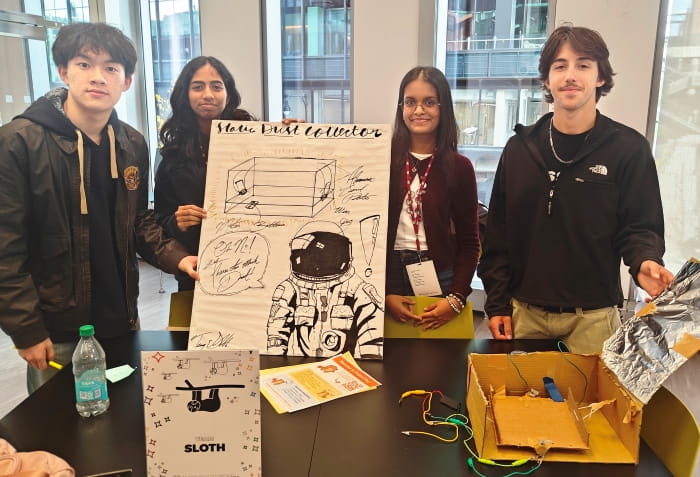
Kenneth (left) and his team presenting their project
Ms. Diarez emphasized, “My creativity skills improved significantly as I observed students working on projects with boundless imagination, such as designing a project for zero gravity that could be tested in space. Now I am planning to apply it in class!”
The week concluded with a Project Exposition, where students presented projects exploring their own STEAM-related ideas, and their creativity and problem-solving skills were on full display.
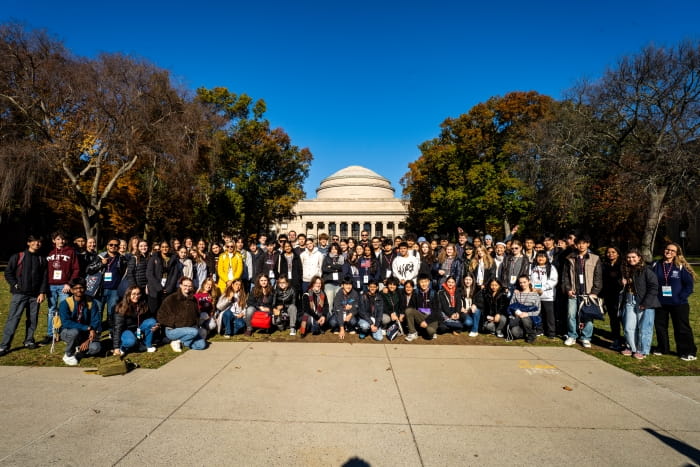
This trip opened students up to new possibilities. It was not just a campus visit. It was hands-on, with real projects, conversations with professors, and meals with MIT students. It showed that learning happens through practical application, not only from books. It was also a great chance for them to explore future majors.
If you are interested in STEAM, we encourage you to apply, take part in the challenge, and get a chance to join this amazing trip next year!
Related news
News image ![Students at MIT]() News | Middle school | High school
News | Middle school | High school
 News | Middle school | High school
 This November: DAIS/DHS Students Head to MIT
On November 2–8, 2025, our students will be participating in a once-in-a-lifetime trip to MIT in Boston.
News image ![DAIS representatives at the NAE Student Summit in Houston]() Blog | High school
Blog | High school
 Blog | High school
 Agents of Change: DAIS Reflections from the NAE Summit
Mr. Singleton and Michael Ma represented our school at the 2025 NAE Student Summit this summer.